
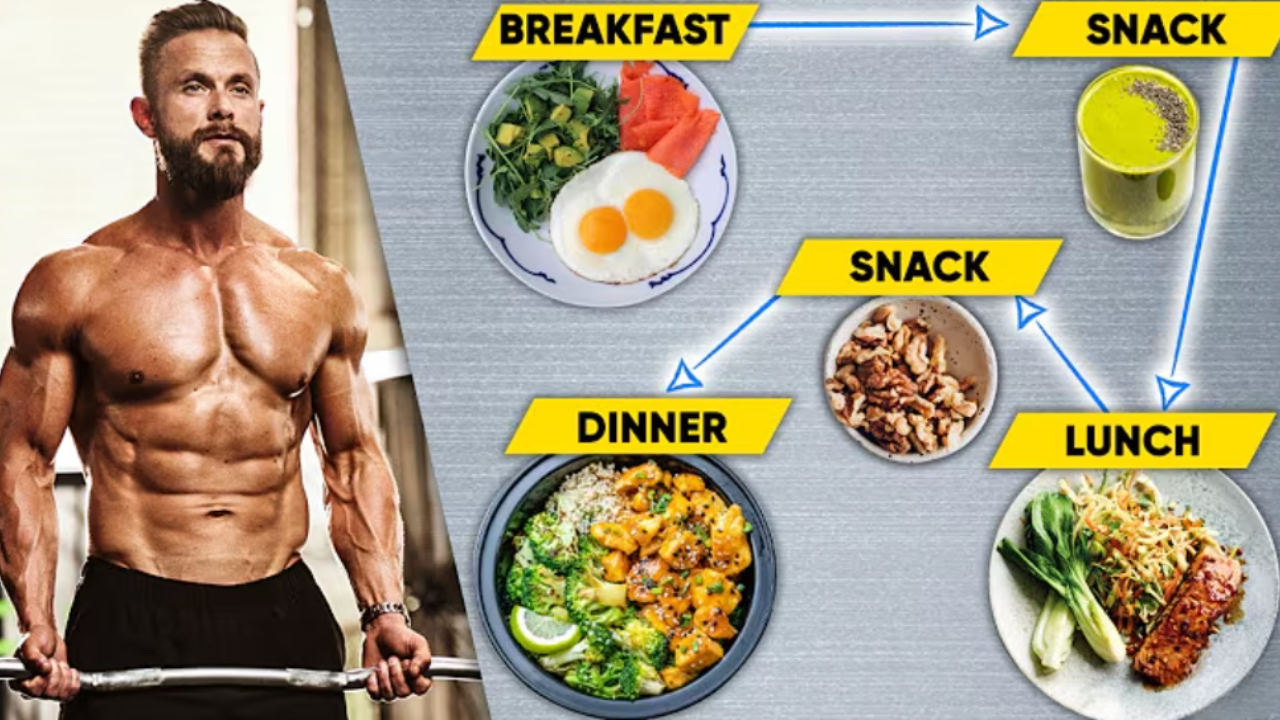
Abs are made in the kitchen. You can run a marathon and still carry extra body fat, and you can be out of shape with a visible six-pack. If you want to lose fat, you have to take control of your food, and meal prep is the easiest way I know to do that in a busy week.
It also matters most right now. November and December are full of parties, leftovers and long days where you grab whatever is closest. If the closest thing in your fridge is a prepped meal that's already on point, you win that moment without needing any willpower.
Here's the simple system I use and teach.
Does meal prep actually help you lose weight?
It helps because of one thing: it makes a calorie deficit easier to hold.
To lose body fat you have to eat fewer calories than you burn. That's true no matter how much you train or what your genetics are. There's no way around it. Meal prep doesn't change that rule. It just takes the daily decisions out of it, and daily decisions are where most diets fall apart.
Quality matters too. Imagine two people on 1,500 calories a day. One eats chicken, fish, brown rice and vegetables. The other eats 1,500 calories of ice cream. Same calories. Who keeps their muscle, feels better and stays healthier long term? Calories decide your weight. What the calories are made of decides whether that weight is muscle or fat.
Step 1: Know roughly how much to eat
I'll give you a starting point, but please don't treat it as exact. Everyone's different.
Calories: for fat loss, take your body weight in pounds and multiply by 12. For maintenance, multiply by 15. Reassess after a few weeks.
Protein: about 1 gram per pound of body weight a day (2 grams per kilo).
If numbers aren't your thing, skip straight to the fist method below. I'm not much for counting calories and macros unless I have to.
Step 2: Build every meal with the fist method
Your fist grows with your body. Bigger person, bigger fist, bigger portion. That makes it a surprisingly good built-in measuring cup.
For lunch and dinner:
One fist of protein
One fist of slow carbs or healthy fat, or a mix of both
At least two fists of vegetables
For breakfast, I go high protein and low sugar. Usually eggs (each one has about 6 grams of protein) or a protein smoothie, and no juice, because juice sends your blood sugar on a roller coaster.
For snacks between meals, protein first: cottage cheese, Greek yogurt, a protein shake.
Two small tips. Measure your food after it's cooked, not before. And if you're surprised by how much food that looks like on the plate, that's normal. When you eat clean, you can eat more than you think.
Step 3: Shop with a short list
You don't need a huge haul. Pick what you like from each group.
Protein
Chicken breast (very lean; thighs carry about ten percent more fat, still a fine choice)
Salmon and any other fish, plus shrimp and scallops
Eggs
Lean beef
Tofu
Greek yogurt and cottage cheese for snacks
Slow carbs
Sweet potatoes and regular potatoes
Brown rice or sprouted rice
Crispbread
Lentils (half carb, half protein, one of my favorite "hybrids")
Healthy fats
Avocado
Nuts
Olive oil
Fatty fish like salmon
Vegetables and fruit
Any vegetables you like. Don't worry about the sugar in carrots. Eat fruit once or more a day for fiber and nutrients, and count it as a carb.
Sauces that won't wreck it
Plain food gets boring fast, and boring is how meal prep ends. Look for marinara, tomato sauce and hot or taco sauces with no added sugar. Check the label: a gram or two of natural sugar is fine, added sugar is what you're avoiding.
If you want ready-made ideas for the protein part, grab my free 5 Quick High Protein Meals guide. Every meal in it takes under ten minutes and preps well.
Step 4: Cook twice a week, not once
Here's where people go wrong. They cook seven days of food on Sunday, and by Thursday it's sad and nobody wants it.
Cook twice instead:
Sunday: cook proteins and carbs for Monday to Wednesday. Wash and chop vegetables.
Wednesday: a shorter session for Thursday to Saturday.
Food safety agencies like the USDA generally say cooked leftovers keep about three to four days in the fridge, so two sessions keep you safely inside that window. Anything you won't eat in time can go in the freezer.
Batch-cook the simple stuff in big trays: a tray of chicken, a tray of salmon, a pot of rice, a tray of roasted potatoes and vegetables. Then mix and match through the week so lunch on Tuesday doesn't look exactly like lunch on Monday.
A simple meal prep day for weight loss
Here's what a prepped day could look like:
Breakfast: scrambled eggs with taco sauce, a slice of crispbread
Snack: Greek yogurt with berries
Lunch: chicken breast, sweet potato, roasted vegetables
Snack: cottage cheese or a protein shake
Dinner: salmon, half an avocado, a big salad with lemon zest
Five meals, protein at every one, and nothing about it is extreme.
How to make meal prep work for a family
I don't cook separate food for myself, and I'd encourage you not to either. Kids don't need to watch a parent obsess over weight loss. So everyone eats the same healthy meal, and I serve the carbs and the fats on the side. The rest of the family takes what they need. I take less. No speeches, no separate pan.
Meal prep through the holidays
This is where the system earns its keep.
Keep your 17 out of 20. I eat about five times a day, so four days is around 20 meals. Seventeen on point, three where I enjoy life. The holiday dinner is one of the three. The prepped lunch the next day is one of the seventeen.
Prep before a party week, not after. Have Monday's meals ready before the weekend, so the reset is automatic.
Turn leftovers into prep. Leftover turkey breast is one of the leanest proteins you'll get all year. Portion it with a slow carb and vegetables and it's tomorrow's lunch.
Watch your drinks. They add up fast. I broke that down in my holiday party drinks guide.
And if you want more recipe ideas to rotate in, my high-protein meals for weight loss post has eight that work well as prep.
Meal prep for weight loss FAQs
How many days in advance can you meal prep?
Three to four days for cooked food in the fridge is the general food safety guidance. That's why I cook twice a week. Freeze anything beyond that.
What should I meal prep to lose weight?
Lean protein, slow carbs, vegetables and a little healthy fat. Build each container with the fist method: one fist of protein, one fist of carbs or fat, two fists of vegetables.
Do I need to count calories if I meal prep?
No. The fist method gets you most of the way there. If your weight hasn't moved after a few weeks, then counting for a short period can show you where the extra calories are coming from.
Is it OK to eat the same meals every day?
Yes, if you enjoy it. Most people don't for long, so batch-cook a few proteins and a few carbs and mix them up during the week.
How quickly will I lose weight with meal prep?
It depends on your body, how big your deficit is, and how consistent you are, so results vary. Stay patient. If it took you three years to put on 30 pounds, give yourself more than two weeks to take it off.
Make it a habit, not a project
Meal prep isn't a 30-day challenge. It's a couple of hours a week that make every other day easier. Start with one session this Sunday and build from there.
If you'd like your training and nutrition planned out alongside it, have a look at my programs, or start a 7-day free trial of the Magnus Method app, where the workouts and nutrition plans are in one place.
That's the Magnus Method.