
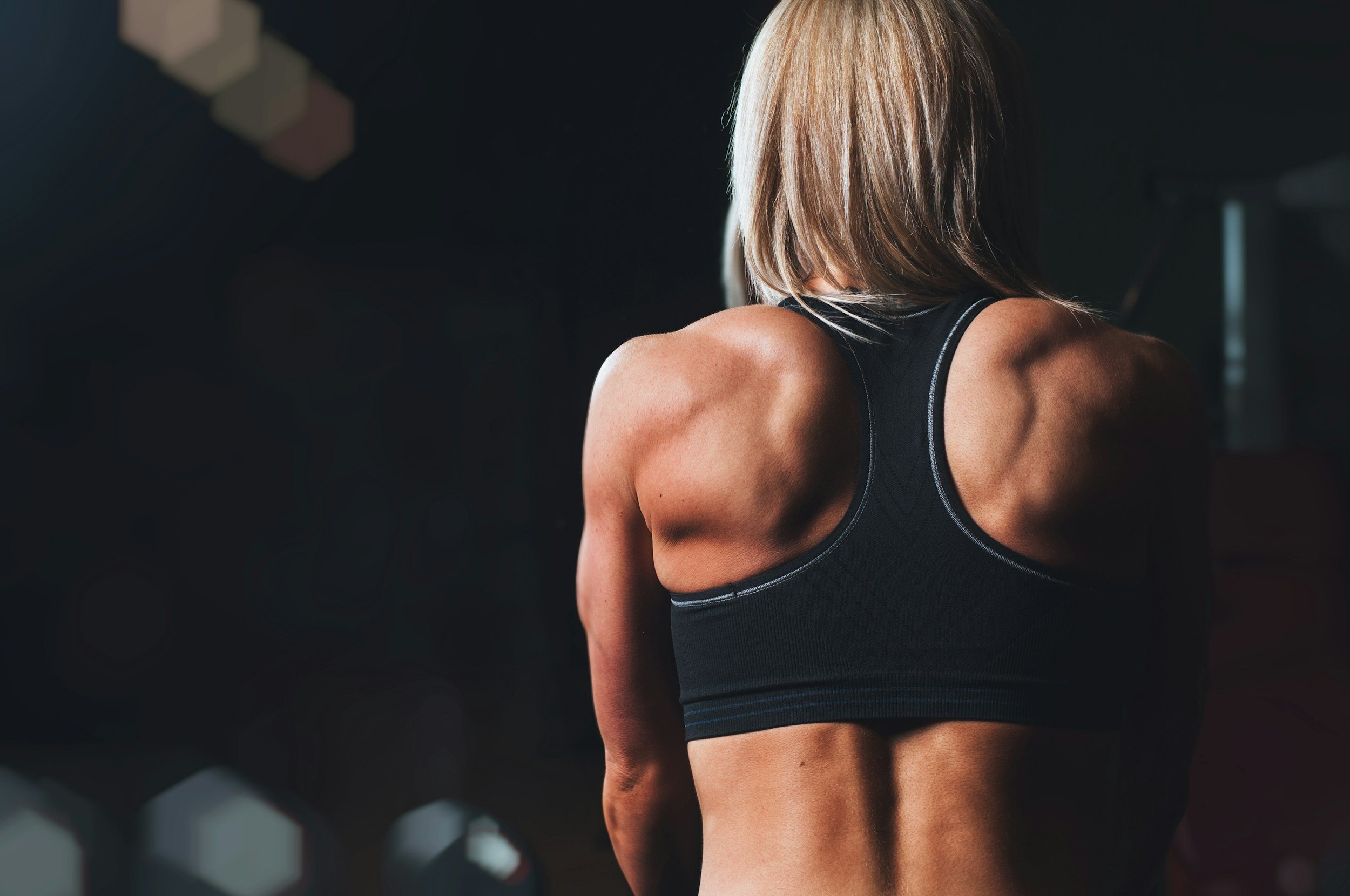
Let's get the big one out of the way first, because it's the reason a lot of women never start. Lifting heavy will not bulk you up. It will not. You don't have the hormonal profile for it, and the women you're picturing when you worry about that have spent years training specifically to look that way. What lifting will do is give you back muscle, strength and bone that you'd otherwise keep losing every year, and it does more for how you feel at 60 than any other thing you can do with an hour. That's why the training programs I build for women in their fifties look a lot more like the ones I build for actors than you'd expect.
So where do you start? Two full-body sessions a week, six to eight real exercises, and weights heavy enough that the last two reps are genuinely hard. That's the honest answer, and the rest of this is why.
Why strength matters more after 50, not less
From your thirties onward you lose muscle mass every year unless you're doing something about it. It's slow, so you don't notice it until the day a suitcase is heavier than it used to be. Bone density heads the same direction, and it accelerates around menopause.
Resistance training is the direct countermeasure to both. It's the signal your body needs to hold onto muscle, and loading your skeleton is what tells it to stay dense. Nothing else sends that signal. Walking is great for you, but walking doesn't ask your body to build anything.
Here's the part I think gets underrated. The reason to do this isn't the mirror. It's that being strong is what lets you keep doing everything else: carrying your own bags, getting off the floor unassisted, playing with grandkids, travelling without worrying about the stairs. I've trained people in their seventies who got noticeably stronger in a matter of months. Age changes how fast you recover. It doesn't change whether you can build.
One caveat and I mean it. If you've got osteoporosis, joint replacements, a heart condition, or you've been out of exercise for a long stretch, talk to your doctor before you start, and ideally get a couple of sessions with a coach who can watch your form. I'm a trainer, not your physician, and that distinction matters more at 55 than it did at 25.
How often should a woman over 50 lift weights?
Two to three days a week, with at least 48 hours between sessions that hit the same muscles.
Why 48 hours? Because you don't grow in the gym. You grow in the recovery afterwards, when your body repairs the tissue you just stressed. Train the same muscle again before that's finished and you're interrupting the process, not doubling it.
If two days a week is what fits your life, do full body both times. That's the setup I'd give most women starting out anyway, because you hit everything twice a week and nothing gets skipped. Three days a week, still full body, just with more variety across the sessions.
Five days a week is the sweet spot for someone deep into training with the schedule to support it. It's not where you start, and you don't need it to get results.
The lifts that matter
You don't need twenty exercises. You need a handful of movement patterns, loaded properly, done for years.
Squat pattern. Goblet squats holding a dumbbell at your chest are the best starting point, because the weight in front naturally keeps your chest up. Progress to a leg press or a barbell squat when your form is solid. This is your legs, your hips and your ability to get out of a chair at 80.
Hinge pattern. Romanian deadlifts with dumbbells or a barbell. This trains the back of your body, which is the half most people neglect and the half that protects your lower back. Start light and get the movement right before you add load, because this is the one where ego causes problems.
Push. Dumbbell chest press, either on a bench or the floor, plus an overhead press once your shoulders are ready for it. If push-ups are too hard right now, do them against a wall or a bench and work down over time.
Pull. Dumbbell rows and lat pulldowns. Pulling movements are what hold your posture together, and posture is a big part of why people start looking older than they are.
Carry. Pick up two heavy dumbbells and walk. It sounds too simple to count. It builds grip, core and confidence better than most machines, and grip strength happens to be one of the better predictors of how well people age.
Single-leg work. Split squats or step-ups. Balance is a skill you lose if you stop practising it, and falls are the thing that actually derails people later on. Hold onto something at first. That's not cheating, that's how you build to not needing it.
Add some direct core work if you like, but honestly, squats, hinges and carries are already training your core hard. For more variation once you're comfortable, I put together the best exercises for women to tone and sculpt, and if you're completely new to the gym, start with a beginner's workout routine that actually works.
A simple two-day full-body week
Here's what I'd actually write down for someone starting this month.
Day A
Goblet squat, 3 sets of 8 to 10
Dumbbell chest press, 3 sets of 8 to 10
Dumbbell row, 3 sets of 10 each side
Romanian deadlift, 2 sets of 10
Farmer's carry, 3 walks of 30 seconds
Day B
Split squat, 3 sets of 8 each leg
Lat pulldown, 3 sets of 10
Overhead press, 3 sets of 8
Step-ups, 2 sets of 10 each leg
Plank, 3 holds of 20 to 40 seconds
Rest one to two minutes between sets. Take the last two reps of each set close to failure, meaning you could maybe manage one or two more with good form and no more. That's what makes the set count. Over a week you want somewhere in the range of 10 to 20 hard sets per body part, and this gets you comfortably into the bottom of that.
Warm up first. Five to ten minutes of easy cardio and a few light sets of whatever you're about to do. At 50-plus that warm-up isn't optional, it's part of the workout.
Progressive overload, in plain terms
This is the whole game, so here's what it means. Progressive overload is just asking your body to do slightly more than last time, over and over, so it has a reason to adapt. More weight, or an extra rep, or an extra set, or the same weight with better control.
Small and steady is what works. If you did 8 reps with 20 lb dumbbells last week, aim for 9 or 10 this week. When you hit the top of your rep range on every set, go up in weight and drop back down the rep range. That's it. That's the mechanism behind every transformation I've ever run, including the ones with famous names attached.
What doesn't work is jumping the weight up because you feel good that day. Form over ego, gradual progression, stretch what's actually tight, listen to your body without over-listening to it, and take your rest days. Those five things are most of injury prevention.
Food and sleep, because the gym is only half of it
You can't build muscle you don't have material for. Aim for roughly one gram of protein per pound of bodyweight a day, split across four or five meals, because your body only uses about 30 to 50 grams at a sitting. That's the single biggest nutrition lever for anyone lifting, and it's the one most women over 50 are furthest from hitting. The fast options are here: high-protein meals for weight loss.
Then sleep. Seven to eight hours. Growth happens in recovery, and recovery happens when you're unconscious. If sleep is the piece that's broken, start there, and I did a whole breakdown on that with Dr. Michael Breus in 5 simple steps to fall asleep faster and get deep sleep.
And no, you don't have to give up wine, bread or dessert to do any of this. Seventeen out of twenty meals on point, three out of twenty you enjoy your life. That's five meals a day across four days. You can't fail on that, which is exactly the point of it.
How long until you see something?
Strength moves first. Most women notice they're lifting more within two to four weeks, and a lot of that early jump is your nervous system getting better at the movement rather than new muscle.
Visible change takes longer, usually two to three months of consistent training before you or anyone else sees it in the mirror. That's not slow, that's just how it works. Rome wasn't built in one day, and neither should your body be.
Motivation is overrated anyway. It's consistency that gets you there. Two sessions a week that you never miss will beat five sessions a week that last a fortnight, every single time.
Strength training over 50 FAQs
Will lifting weights make me bulky? No. Ladies, don't be afraid of lifting heavy, it will not bulk you up. Building large amounts of muscle takes years of deliberate work, a surplus of calories, and a hormonal profile most women don't have. What you'll get is stronger and denser, not bigger.
How heavy should I lift? Heavy enough that the last two reps of a set are genuinely difficult with good form. If you finish a set of 10 and could have done 18, the weight isn't doing anything. If your form breaks down at rep 5, it's too heavy.
Can I strength train at home without a gym? Yes. A set of adjustable dumbbells and a couple of resistance bands covers every pattern on this list. Home training fails on progression, not equipment, so make sure you can keep adding weight over time.
Is it too late to start at 60 or 70? No. Muscle responds to training at every age. I've worked with people in their seventies who got measurably stronger. Recovery takes longer, so you train a bit less often and warm up more, but the adaptation still happens.
How long before I see results? Strength in two to four weeks, visible changes in two to three months, meaningful change in six. Take photos, because the mirror is a terrible judge of gradual progress.
Should I do cardio as well? If you enjoy it, yes, 15 to 20 minutes before your sessions works well and it's good for your heart and your longevity. It isn't required for fat loss, and it shouldn't replace lifting. Here's my test for a rest day: are you adding cardio because you need it, or because you'd feel guilty otherwise? If it's guilt, skip it.
Start with two sessions this week
You don't need the perfect program. You need to pick two days, do the six lifts, and come back next week and do slightly more. Do that for six months and you'll be a different person, and none of it will have come from a shortcut, because there aren't any. Put in the time, put in the hours.
If you'd rather have it all laid out for you, with the progression handled, the programs are in the Magnus Method app.
That's the Magnus Method. And you got this.
