
Do Sauna Benefits Live Up to the Hype?
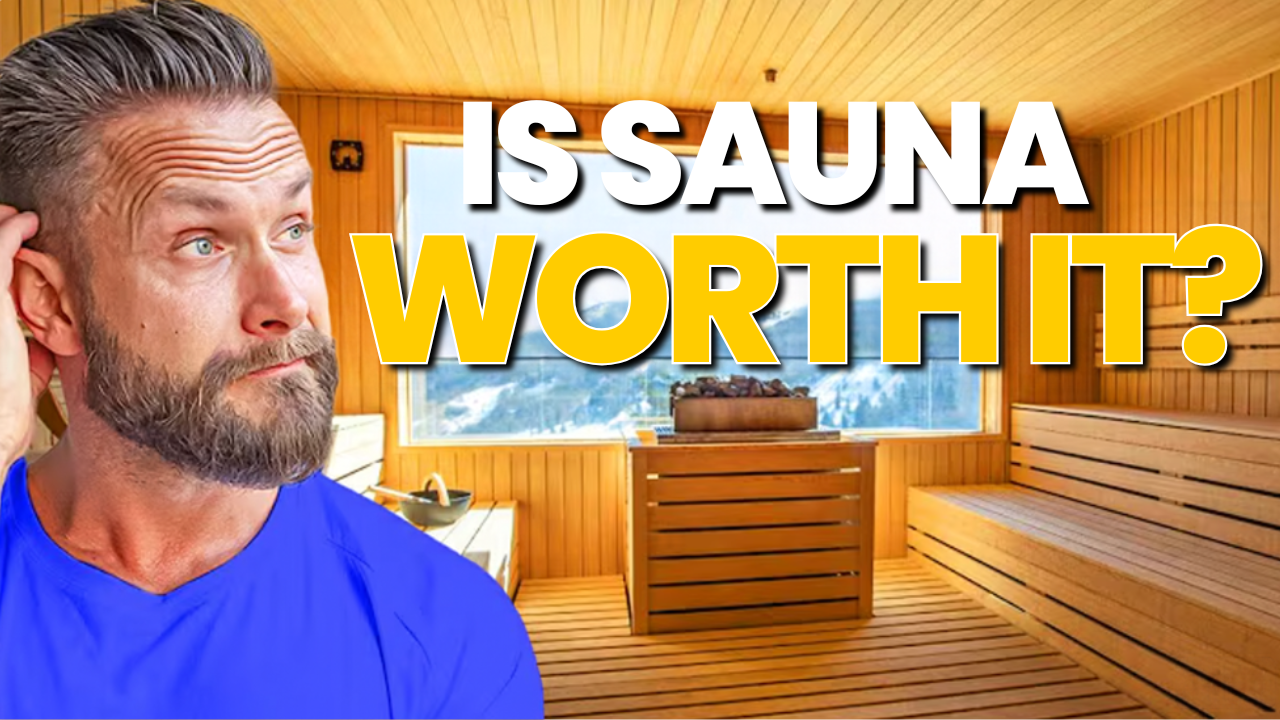
So are sauna benefits real, or is this just another thing the internet decided to be obsessed with this year? They're real. But they're almost never the ones you're being sold. The sauna won't burn your fat, it won't detox you, and hotter isn't better. What it will do is support your heart, help you recover from training, and put you in a better headspace, which is honestly the part I'd argue for hardest. It's a tool, and it works best sitting next to a training program you actually follow.
I use the sauna with my family most weeks. For me it's not a protocol. It's twenty minutes where nobody's on a phone. But let's deal with the claims first, because there's a lot of nonsense out there.
Do saunas burn fat? No, that's water weight
Step on a scale after a sauna and you'll weigh less. Drink a glass of water and it comes back. That's the whole trick.
Here's the mechanism. Your body doesn't want to overheat, so it sweats to cool you down. Sweat is water and salt, not fat. You lose weight the same way a wet towel loses weight when it dries.
There's a small kernel of truth people cling to: your heart rate does climb in a sauna, because cooling you down takes work, and work burns calories. An older study even put sauna heat stress somewhere near moderate exercise for calorie burn. But you'd need an absurd amount of sauna time for that to matter, and you'd still lose the fat the same way everyone loses fat, which is a calorie deficit held long enough to count. If you want the honest version of how that works, I broke it down in macros vs calories.
You cannot out-train a poor diet, and you definitely can't out-sweat one.
Does sweating detox your body? Also no
I get this one constantly. Sweat out the toxins, sweat out the bad stuff.
Your liver and your kidneys handle that. They're extremely good at it. Yes, you can find trace heavy metals in sweat if you go looking with sensitive enough equipment, but trace means trace, and it's nowhere near enough to move any number that matters for your health.
The only real detox in a sauna is leaving your phone outside for twenty minutes. I'm only half joking about that one.
Is hotter and longer always better?
No, and this is where people actually get hurt.
The research on sauna is built on regular, sensible sessions. Normal temperatures, normal durations, water in between. It's not built on people trying to set personal records at 220 degrees. Pushing past what your body can handle doesn't buy you extra benefit, it just buys you dizziness, dehydration, and a bad afternoon.
Sauna isn't about suffering. It's a controlled dose of heat stress, and like any stress, the dose is the point.
Dry sauna vs infrared: which one has the research?
Not all saunas are the same, and this matters more than most people realize.
Dry sauna, the Finnish, Swedish and Estonian style, is what nearly all the good long-term research is built on. Low humidity, hot air, usually somewhere between 160 and 200°F, water thrown on the rocks when you want a burst of steam. Saunas have been around a couple of thousand years and the word itself is Finnish, so it makes sense the Finns are the ones who studied it properly.
Infrared saunas are everywhere right now and they come with a lot of claims. The research behind those claims is thin. That doesn't make infrared useless, it just means when somebody quotes you a big sauna study, that study was almost certainly done on a dry sauna. Know which one you're buying.
Steam rooms are a different thing again. High humidity, lower temperature, different response from your body.
The sauna benefits that actually hold up
Now the good part. These are the ones with real evidence behind them, and again, mostly dry sauna.
Your heart
This is the strongest one. Regular dry sauna use is linked with lower blood pressure and arteries that stay more flexible as you age, and with a lower risk of dying from heart attack and stroke. A large body of Finnish research is where most of this comes from.
The interesting part is it seems to stack with exercise rather than replace it. Training already improves blood pressure and cholesterol. Sauna after training may add to that. So this isn't cardio you can skip the gym for. It's something you do on top.
Recovery after training
A sauna after a hard session feels incredible, and there's more going on than just feeling good. Sauna use has been linked with a bump in growth hormone, lower inflammation, less oxidative stress, and better circulation, and better blood flow is how nutrients get to muscle that's trying to repair itself.
There's a nice detail in the Mayo Clinic work: sauna raised norepinephrine, the same way a workout does. Your body reads heat as a stressor and adapts to it. In that sense a sauna is a little like a training session your legs don't have to pay for.
Sleep
Warming up and then cooling down is one of the oldest sleep signals there is. Your core temperature naturally drops as you head toward sleep, and a sauna exaggerates that drop, which is why a lot of people feel genuinely cold an hour afterwards. That cool-down is the useful bit.
And sleep is where you actually grow. Seven to eight hours, every night, is more valuable than any supplement anyone will sell you. I went deep on this with Dr. Michael Breus in 5 simple steps to fall asleep faster and get deep sleep, and if you want the version aimed at body composition, that's 10 habits to shed pounds in your sleep.
Long-term health
Some of the longest-running Finnish work followed over 2,000 men and reported a large reduction in Alzheimer's and dementia risk and a meaningful drop in overall mortality among frequent sauna users. Those are observational studies, so they show a strong association rather than proof that the sauna caused it. Still, the pattern keeps showing up.
Breathing
Sauna air, especially with a bit of steam, can feel like a hot shower does when you're congested. Research points toward some respiratory support, and possibly some help with asthma and bronchitis. It's not a treatment. If you've got a lung condition, ask your doctor how sauna fits, because the answer genuinely varies by person.
The mental side, which might be the real one
Here's the benefit I'd argue for the hardest, and it's the least measurable.
Stress, anxiety and low mood will wreck a good training plan faster than a bad program will. The smaller studies looking at stress, anxiety and depression symptoms before and after sauna generally point the same direction: people feel better afterwards. How much varies a lot person to person, and we don't know the long-term picture.
But consistency is what gets you results, and consistency is much easier when your head is in a decent place. So a thing that reliably makes you feel better is a training tool, even if it never shows up on a scale.
How to use a sauna without wrecking yourself
Most dry sauna research sits roughly between 160 and 200°F, or 70 to 90°C. Anywhere in that range works. Your tolerance builds over months, so where you start is not where you'll end up.
The rules that actually matter:
Don't go in after drinking alcohol.
Don't go in sick.
Don't go in against a doctor's advice. Heart conditions and pregnancy both change the answer.
Drink water between rounds, not just after.
Here's how I run it. I never decide in advance how long I'm staying, and I don't decide it for anyone else in there with me. When I started it was about five minutes at a time with a cold shower between, three or four rounds. These days it's anywhere from seven to twenty minutes depending on how I feel and who I'm with, still with cold showers or a cold bath in between, usually two to five rounds in a session.
Think of it like sets. Sauna and cold are the sets. You wouldn't grind out one endless set in the gym, so don't do it in the sauna either.
And no, you don't need to buy anything. You don't need an infrared cabin, a cold plunge, or a subscription. A gym sauna and a cold shower does the job.
So, is the sauna worth it?
Yes, when you use it properly and you're honest about what it does. A dry sauna a few times a week supports your heart, helps you recover, probably helps you sleep, and reliably makes you feel better. It's not a fat loss tool, it's not a detox, and it won't rescue a week of bad eating.
For me it's also the part of the week where the world slows down and I'm just sitting with my family. Sometimes we talk, sometimes nobody says anything. Both are worth showing up for.
Sauna FAQs
How often should you use a sauna to get the benefits? Most of the research showing heart and longevity benefits looked at people using a sauna two to four times a week, with the strongest results in the frequent group. Two or three sessions a week is a sensible place to start.
How long should you stay in a sauna? Start around five minutes per round and build from there. I go seven to twenty minutes depending on the day, with a cold shower between rounds and two to five rounds total. Get out when your body says get out, not when a timer says so.
Is it better to sauna before or after a workout? After. Before a session, the heat and fluid loss can leave you flat and dehydrated for the actual training. After, it fits the recovery picture much better.
Does an infrared sauna give the same benefits as a dry sauna? The claims are similar. The evidence is not. Almost all the strong long-term research is on traditional dry saunas, so if you're choosing based on what's proven, that's the one.
Can a sauna help you lose weight? Not in any way that lasts. What you lose is water and you get it back as soon as you rehydrate. Fat loss comes from a calorie deficit you can actually hold, and nothing changes that.
Who should avoid the sauna? Anyone who's been drinking, anyone who's sick, and anyone with a heart condition, blood pressure issues or a pregnancy who hasn't cleared it with a doctor first. This is a case where you ask a professional rather than a trainer on the internet.
Recovery is part of the plan, not a bonus
The sauna is one tool. Training, food and sleep are the plan. If you want all of that structured for you instead of assembled from a hundred different videos, the Magnus Method app has the programs, the nutrition and the recovery built in.
That's the Magnus Method.