
Smoothie Recipes for Weight Loss
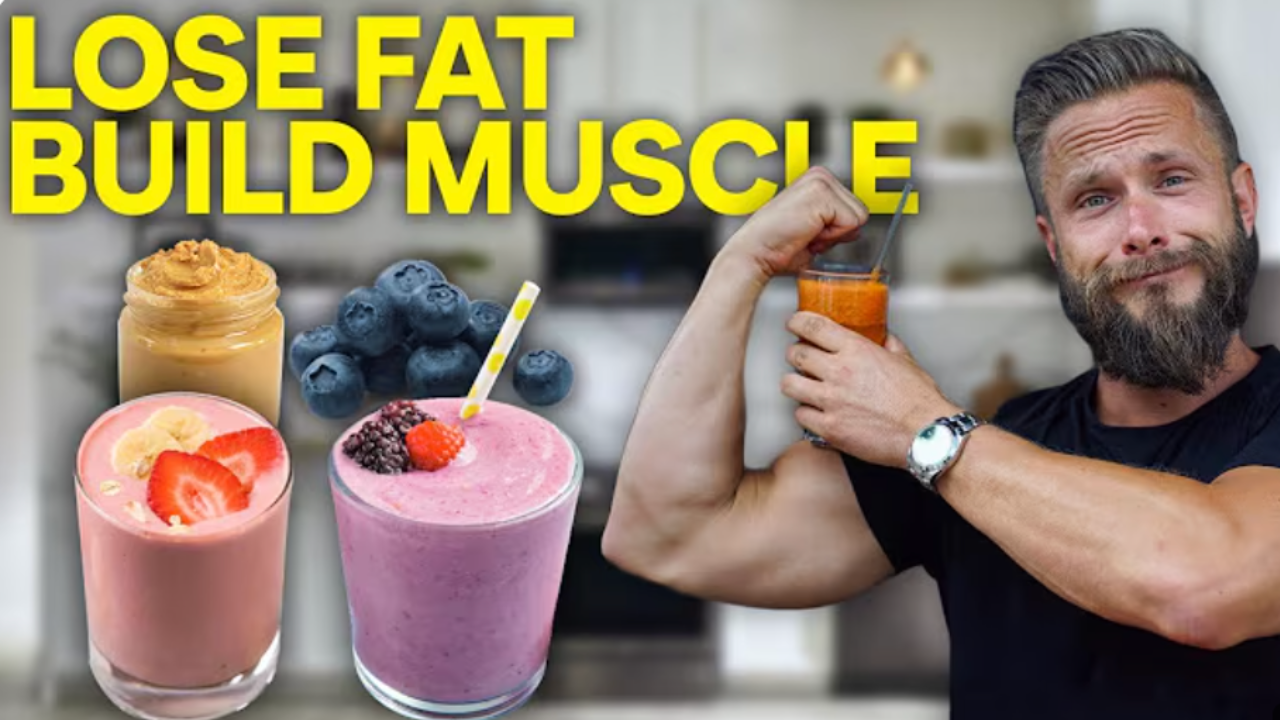
A smoothie will help you lose weight right up until the moment it turns into a milkshake. That's the whole issue with them. Blend the right four things and you get a fast, high-protein meal that keeps you full for hours. Blend the wrong four and you've just drunk 700 calories of fruit juice and called it health food. So here are six smoothie recipes for weight loss I actually use, and more importantly, the formula underneath them so you can build your own. If you want them as a printable, they're in my free 6 Easy Protein Smoothies guide.
Quick note before the recipes, because it changes how you read them: no smoothie burns fat. Fat loss comes from eating fewer calories than you burn, held long enough to matter. What a good smoothie does is make that deficit survivable, because protein and fiber keep you full and stop you raiding the kitchen at four in the afternoon.
The formula: four parts, every time
If you remember nothing else, remember this. Every smoothie worth drinking has four parts.
Protein. Two scoops of protein powder, around 40g, or Greek yogurt, or a mix. This is the part that keeps you full and protects your muscle while you're losing fat. It's the non-negotiable one.
Fruit. One serving. Frozen works better than fresh because you get the thickness without loading it with ice. Berries are the best value here.
Greens. A cup of spinach. You won't taste it. You'll get fiber, iron and volume for almost no calories.
Liquid. Water or unsweetened almond milk. Not juice. Juice is where smoothies go wrong.
Then, optionally, a small amount of fat: a few walnuts, a tablespoon of nut butter, some flax or chia. It'll keep you full longer. Keep it small, because fat is 9 calories a gram and it stacks up fast in a blender where nothing feels like it counts.
That's it. Protein, fruit, greens, liquid. Now here's what that looks like in practice.
6 smoothie recipes for weight loss
I've grouped these the way I actually think about them. Two for a snack or post-workout, two for when you're building muscle, and two for when you're cutting.
1. Berry shake
This one's my default as a snack or after training. Berries bring antioxidants, spinach brings fiber and iron, walnuts bring the fats that keep you satisfied, and the protein powder does the actual work.
12 oz water
1 cup spinach
2 cups frozen berries
2 scoops vanilla protein powder (40g)
A small handful of walnuts
Ice
Blend until smooth.
2. Apple cinnamon shake
A comfort one, and better for recovery than it sounds. Apples give you fiber and steady energy, cinnamon helps with blood sugar and cravings, and the oats add slow carbs if you've just trained.
2 scoops vanilla protein powder (40g)
1 apple, skin on
1 cup spinach
A small handful of walnuts
Oats (optional)
Cinnamon
Ice
Blend it thoroughly, especially with the skin on the apple.
3. Chocolate peanut butter shake
Now the muscle-building end. This tastes like dessert and it isn't one, which is the whole point. Almond butter for fats, banana for potassium and sweetness, cacao for the flavour and the antioxidants.
12 oz water or almond milk
2 scoops chocolate protein powder (40g)
1 cup spinach
2 tablespoons almond butter
1 banana
Cacao or cocoa powder
Ice
If you're cutting, drop the almond butter to one tablespoon and skip the banana.
4. Chocolate cherry shake
Cherries are worth knowing about. They're anti-inflammatory, and there's decent evidence they help with muscle soreness after a hard session. Flax seeds add omega-3s.
12 oz almond milk
2 scoops protein powder (40g)
1 cup pitted cherries
1 cup spinach
Walnuts
Flax seeds
Cacao
Ice
5. Lean shake
The cutting one. Nothing clever about it, and that's deliberate. Maximum protein, minimum everything else, so it fits into a tight calorie day without you having to do arithmetic.
Water
Ice
2 scoops protein powder (40g)
Coconut flakes
6. Mint shake
Refreshing, easy on the stomach, and a good one late in the day when you want something that feels like a treat and isn't.
Half water, half almond milk
Ice
Unsweetened cacao
Fresh mint leaves
2 scoops protein powder (40g)
Where people go wrong with weight loss smoothies
I've seen every version of this. These are the four that actually cost people results.
Using juice as the liquid. Orange juice, apple juice, "no sugar added" anything. You can put 200 calories of fast sugar into a smoothie before you've added a single ingredient you'd call food. Water or unsweetened almond milk. Always.
Too much fruit, not enough protein. A smoothie that's three fruits and a splash of yogurt is a dessert. One serving of fruit, a real serving of protein. Your body absorbs roughly 30 to 50 grams of protein per sitting, which is why I use two scoops rather than one.
Free-pouring the nut butter. Nut butter is great. Nut butter straight from the jar with a spoon you didn't measure is 300 calories you didn't count. Use a tablespoon.
Treating the smoothie as an extra. If you add a 400-calorie smoothie on top of everything you were already eating, you'll gain weight. It replaces a meal or a snack. It doesn't join them.
If you want the honest explanation of why the calorie side of this matters at all, that's in macros vs calories.
Are smoothies actually good for weight loss?
Yes, but not for the reason people think. They're good because they solve a logistics problem.
Most people don't fail their diet because they don't know what to eat. They fail it at 7am on a Tuesday when there's no time, and at 4pm when they're starving and the only thing nearby is a vending machine. A smoothie takes ninety seconds and delivers 40 grams of protein. That's the entire value.
So what should you actually aim for? Around 1 gram of protein per pound of bodyweight across the day, spread over four or five meals so you're eating every three hours or so. A smoothie is one of those meals. It's not magic. It's just the easiest one to hit.
And no, you don't have to give up real food or live on shakes. I eat five meals a day and only one of them ever comes out of a blender. If you want the solid-food version of the same idea, that's five high-protein meals you can make in under 10 minutes, and for mornings there's overnight oats for weight loss.
Smoothie FAQs
Are smoothies good for weight loss? They can be, when they replace a meal rather than adding to one and when they're built around protein. A smoothie with 40g of protein, a serving of fruit and a cup of greens keeps you full for hours. A smoothie made of juice and three fruits does the opposite.
What should I put in a smoothie to lose weight? Protein powder or Greek yogurt, one serving of frozen fruit, a cup of spinach, and water or unsweetened almond milk. Add a small amount of nuts, nut butter or seeds if you want it to hold you longer.
How many calories should a weight loss smoothie be? Enough to work as a meal, so somewhere around 300 to 400 calories with at least 30 to 40 grams of protein. Under that and it's a snack you'll be hungry after. Over it and you're eating a milkshake.
Can I drink a smoothie every day? Yes. Protein powder is fine daily, all year, and so is a daily smoothie. Just don't let it be the only vegetable you eat.
Is a smoothie better than a protein shake? A smoothie is a protein shake with fiber in it. The fruit and greens add volume and slow digestion down, which is why it keeps you full longer. If you're short on time, a plain shake still counts.
Should I have a smoothie before or after a workout? After is the easy answer. Training breaks tissue down and protein afterwards is what builds it back. Before a session, most people do better with something lighter.
Blend it, drink it, get on with your day
Pick two of these, buy the ingredients this week, and stop deciding what breakfast is every morning. That's the actual win here. Consistency is what gets you there, not the perfect recipe.
Grab the printable version in my free 6 Easy Protein Smoothies guide, and if you want the food and the training in one place instead of scattered across the internet, that's what the Magnus Method app and my training programs are for.
That's the Magnus Method.
