My Top 5 Leg Exercises for Strength and Power
After 26 years as a personal trainer, I've tried just about every leg exercise out there. Some I loved. Some I dropped. But there are a few I keep coming back to, no matter who I'm training or what goal we're chasing.
These are my top leg exercises right now. The same ones I use in my own training and program for the actors and athletes I coach. They cover power, heavy strength, single-leg control, isolation, and balance. That's the full package.
TL;DR
The leg press builds heavy quad strength while keeping your back and hips supported
Skater jumps train lateral power, glute strength, and ankle stability for real-life movement
Leg extensions isolate the quads and actually help protect your knees when done right
Hamstring curls train knee flexion, which most compound lifts miss
Bulgarian split squats build single-leg strength, balance, and unilateral control
Honorable mentions: goblet squats, hip thrusts, and deadlifts all deserve a spot in your training
Be explosive on the way up, controlled on the way down, and always plant your full foot
1. Leg Press
The leg press is a compound movement that loads your lower body heavy while keeping your spine supported. It hits your quads first, but your glutes, adductors, and hamstrings get involved too.
What makes this one so powerful is progressive overload. You can push hard without your lower back limiting you. If your goal is quad growth or building serious size, this is one of the safest ways to drive real volume.
A few setup tips:
Put your feet where they feel most comfortable. Forget the "high for glutes, low for quads" rule. Find your pattern.
Keep both feet at the exact same level. Off by an inch and your hips and spine will pay for it.
Sink fully into both back and seat cushions.
Don't let your hips lift or your back round at the bottom.
Plant your whole foot. Press with your heels just as much as your toes.
Control on the way down. Explosive on the way up. No bouncing at the top.
2. Skater Jumps
This is where we train power and athleticism. Most training happens in a straight line, but real life doesn't. Skater jumps build lateral strength, glute medius activation, ankle stability, and deceleration control.
This is durability training. Strong legs aren't just about size. They're about control.
When you do skater jumps, aim for height and width. Slow on the wind-up, then explode to the side as far as you can. Land soft, plant your whole foot, and stay balanced.
If your balance is shaky at first, it's okay to tap your back foot down. Eventually you won't need to.
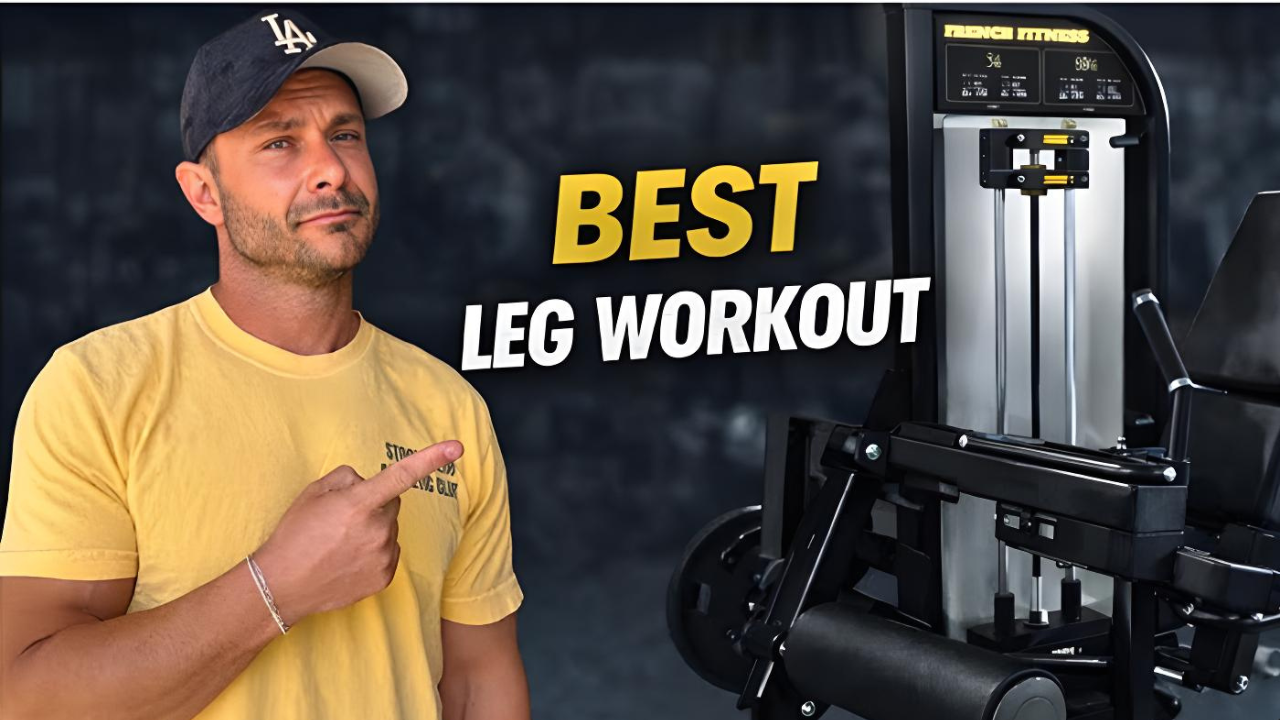
3. Leg Extension
The leg extension is pure quad isolation. It trains knee extension directly and hits all four heads of the quad, especially the VMO, that teardrop muscle right above the knee.
Compound lifts build strength. Isolation builds detail.
Here's something you need to hear: leg extensions are not bad for your knees. There are videos out there telling you to skip this exercise if your knees hurt. That's a bunch of crap. Done with control and the right load, leg extensions actually help build knee stability.
Of course, if you have something specific going on with your knee, always consult a professional first.
The rule for this one: be explosive on the way up while staying controlled. No bounce at the top. Then slow it down on the way back and feel that resistance through the negative.
4. Hamstring Curl
This one is critical. Most compound lifts train hip extension. Hamstring curls train knee flexion. That difference matters more than people realize.
Hamstring curls strengthen the hamstring in its role of protecting the knee. They balance out all the quad-dominant work most of us do. If you care about performance and longevity, you don't skip this.
Same rules as the leg extension. Explosive in the concentric phase. Controlled and slow on the negative. Full range of motion at both ends.
5. Bulgarian Split Squat
The Bulgarian split squat builds unilateral strength and exposes any weaknesses between your left and right side. It's humbling, even for advanced lifters.
Set your back foot up on a bench. The trick is to relax that back leg. It's hard at first, but once you get it, you'll feel everything through the front leg.
Slow on the way down. Keep the resistance. Explosive on the way up.
Sometimes you need to do one rep just to figure out your foot placement. That's fine. Adjust and go.
Honorable Mentions
There are a few more leg exercises that deserve respect, even if they didn't make my top 5 today.
Goblet squats and front squats are fantastic for quad development and core engagement. Holding the load in front keeps you more upright and forces the quads to do the work. If you're learning how to squat, start here.
Hip thrusts are elite for glute development. They train hip extension with high force and very little spinal fatigue. If glute growth is your goal, this movement belongs in your program.
Deadlifts, whether conventional, Romanian, or hex bar, build foundational posterior chain strength. They train your glutes, hamstrings, and the entire hip hinge pattern. Just remember, deadlifts train hip extension, not knee flexion. That's why you still need that hamstring curl.
The Big Picture
Here's how it all fits together:
Leg press builds quad overload
Leg extensions refine and isolate
Hamstring curls balance and protect
Skater jumps build athletic durability
Bulgarian split squats build unilateral strength
You don't need random exercises. You need intentional ones.
Train for strength. Train for balance. Train for durability. That's how you build powerful legs that look great and perform even better.
These are five of my favorite leg exercises right now. Are they the only ones that matter? No. There are plenty of incredible movements out there. But if you build your leg day around these, you're going to see real results.
And remember, we don't skip leg day.
FAQ
How often should I train legs? Once or twice a week works for most people. Give yourself at least 48 hours between intense leg sessions for proper recovery.
Are leg extensions safe for my knees? Yes, when done with control and proper load. They can actually help build knee stability. If you have a specific knee issue, talk to a professional first.
Should I lift heavy or do more reps for legs? Both. Use heavier weight for compound lifts like the leg press, then move to higher reps for isolation work like leg extensions and hamstring curls.
Do I need fancy equipment to train legs? No. Bulgarian split squats, skater jumps, and bodyweight movements can build serious strength without a single machine.
Ready to Train Smarter?
If you're serious about building a strong lower body, I've laid out complete leg programs inside the Magnus Method App. Same exercises. Same structure. Same approach I use with the actors and athletes I coach every day.
More from the blog